
Most people who move to a new city say the same thing afterward: I brought too much. The couch that barely fit through the new door, the boxes of kitchen things that stayed taped shut until the next move. Every item you take has to be packed, carried, shipped, carried again and unpacked, and you pay for each of those steps.
So the best moving advice is boring, and it works: take less. The tricky part is deciding what “less” means, and doing it early enough that you are not stuffing bags at midnight before the truck shows up.
Two Months Out: Decide What Earns a Spot
Walk through your place with a notebook and sort everything into three lists: coming with me, selling or giving away, and getting rid of. Be hardest on the big stuff. A useful test is to ask whether you would buy this exact piece again, at full price, after you arrive. If the honest answer is no, it probably should not cross the country with you.
Some things are almost never worth moving. Cheap flat-pack furniture rarely survives being taken apart twice, and replacing it usually costs less than shipping it. Old mattresses are bulky, awkward to keep clean in a truck and often near the end of their life anyway. Appliances are a gamble, because many rentals come with them and the sizes and hookups in your new place may not match. Then there are the duplicates: the second set of dishes, the spare TV, the desk chair nobody sits in.
What is worth the cost? Documents, family photos, art, good tools and the furniture you actually love.
Six Weeks Out: Start Selling Now, Not Later
Selling always takes longer than you think. Post furniture and electronics at least a month ahead with clear photos and honest prices, and price to sell rather than to get your money back. Whatever is still around two weeks before moving day can go to friends, neighbors or a charity that picks up furniture.
Keep a list of what has left the house. It sounds fussy, but it makes the last round of packing much easier to plan.
A Month Out: Pick How Your Things Travel
Once you know what is coming, the cheapest way to move it gets obvious.
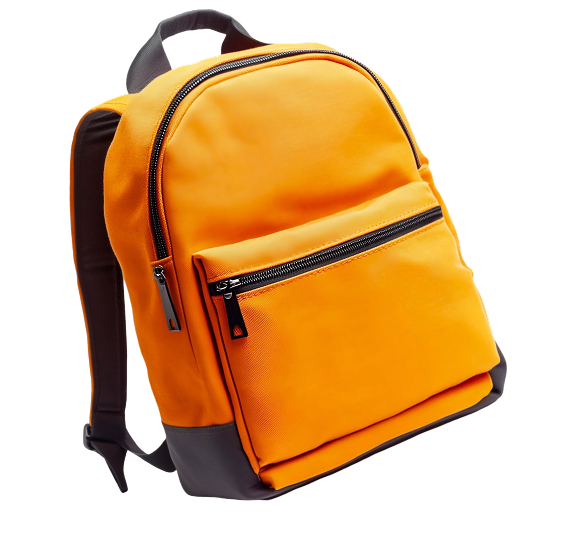
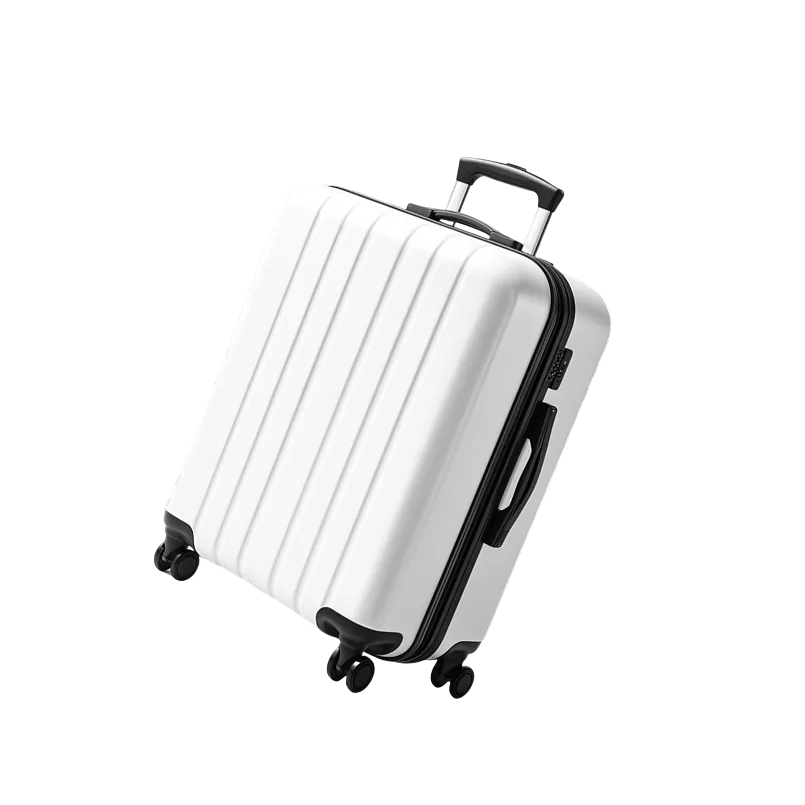
If you are moving into a furnished place, two large checked bags and a carry-on can hold clothes, documents and essentials for weeks. Books, kitchen basics and out-of-season clothes can go by ground shipping, which is often cheaper than paying for extra bags. Real furniture is when a portable container or a moving company makes sense. Get three quotes and ask exactly what each one includes, because “full service” means different things to different companies.
Watch for gaps, too. If there are a few days between handing back your old keys and getting the new ones, figure out where your bags will wait. Short-term storage near your new address beats dragging suitcases through a hotel lobby and back.
Two Weeks Out: Pack the Bag You’ll Open First
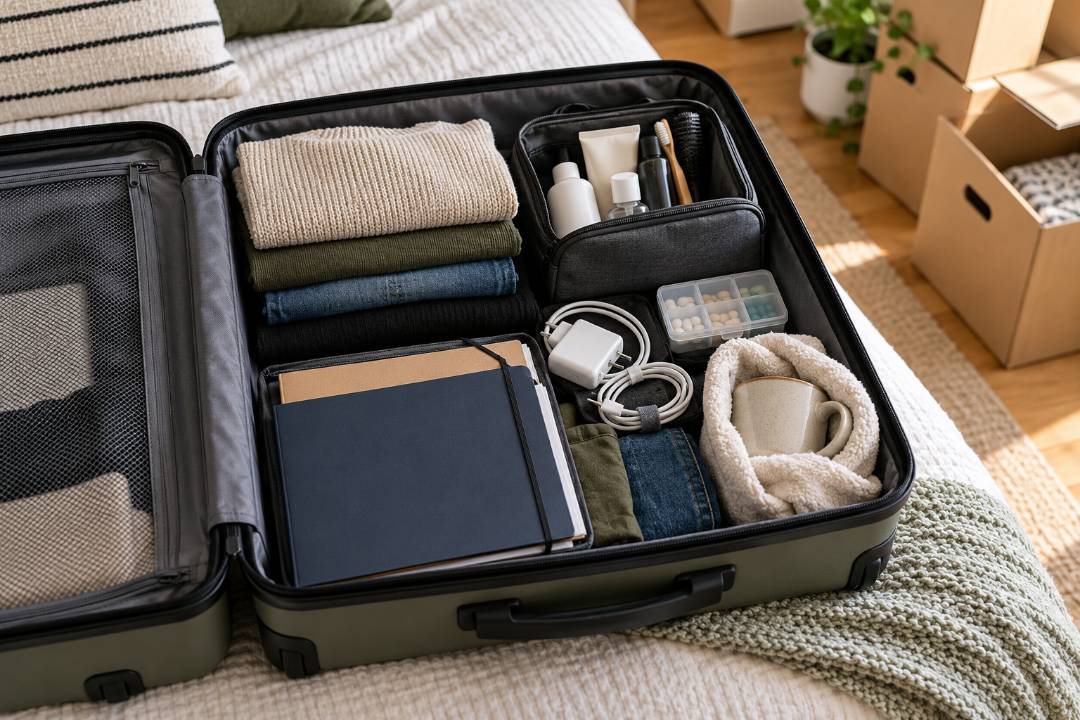
Pack one bag as if you were leaving on a five-day trip: clothes, chargers, medication, toiletries, a few kitchen basics, important documents and whatever your pets need. It travels with you, not on the truck. Trucks run late, and your first night in a new city goes a lot better when you can shower and find your laptop without opening twenty boxes.
Two small habits save a surprising amount of grief. Take a photo of the back of the TV and the computer before you unplug anything, and put screws and small hardware in labeled zip bags taped to the furniture they came from.
The Last Week: Deal with What’s Left
However carefully you plan, the last week turns up surprises. There is the shelf in the basement, the broken chair in the garage, a box of cables nobody claims, the old grill on the balcony. Leave them behind and they can come out of your deposit or turn into an argument at closing.
Book the final clear-out for a day or two after the movers leave, when you can see exactly what is left. If you are leaving a house in the Chicago suburbs, for example, a local junk removal crew booked through hoverlacs.com can take the leftover furniture and odds and ends in one visit. Wherever you are moving from, ask haulers how they price the job and whether they can come after you have already left town.
Before you hand over the keys, walk through every empty room with your phone and take a slow video. If anyone asks later what condition you left the place in, that video answers it.
Your First Week in the New City
This is where moving light pays you back. With fewer boxes you can unpack over a weekend and spend the rest of the week figuring out where you live.
Walk your neighborhood in the first couple of days and find the nearest grocery store, pharmacy, coffee shop and transit stop. Get a transit card and ride the main lines once, just to see where they go. Update your address with your bank, your employer and your subscriptions, and look up your new state’s deadline for changing your driver’s license and voter registration.
Hold off on buying furniture. Live in the space for a few weeks first; you will choose better once you know how you actually use each room. And say yes to the invitations, even the slightly awkward ones. Coworkers, neighbors and local clubs are how a new city stops feeling like a hotel stay.