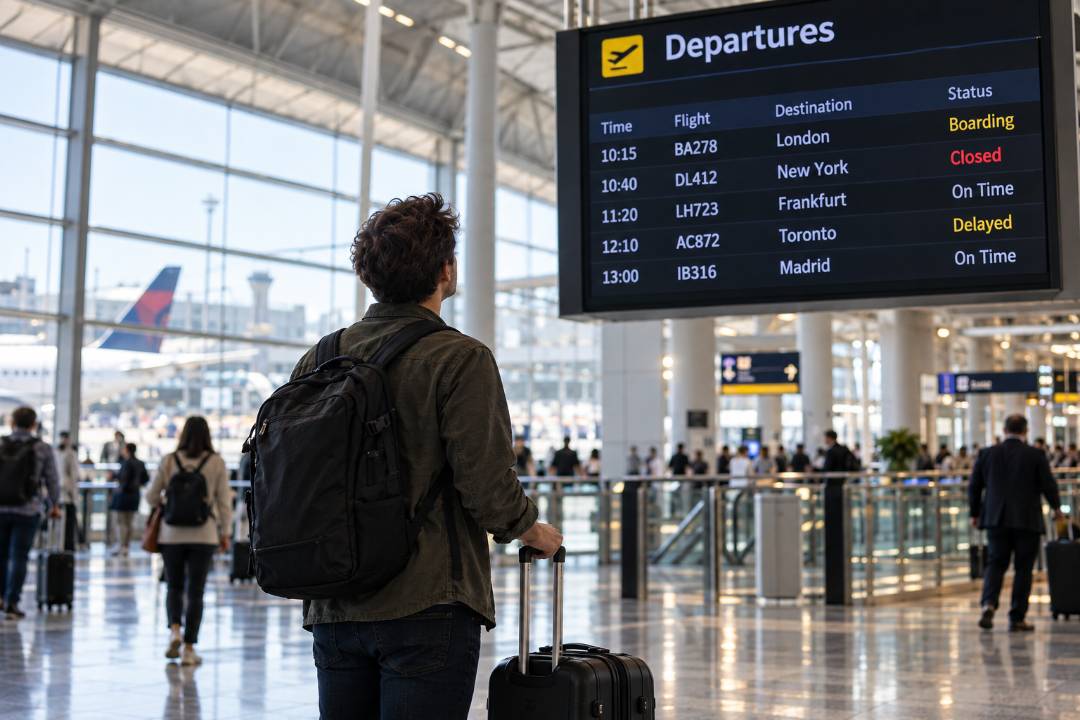

The gate is closed, the plane is pushing back, and the boarding pass in hand is suddenly worthless. Missing a flight happens to experienced travelers too: a traffic jam on the way to JFK, a long security line at Heathrow, or a late inbound flight that leaves no time to make a connection. What happens next depends far less on luck than on two questions: who caused the miss, and how the trip was booked.
The answer decides whether the airline owes a free seat on the next flight, meals, a hotel and even cash compensation, or whether the ticket is simply lost. The sections below explain what airlines do with a missed booking, the rules in the US, the EU and the UK, how missed connections work on one ticket versus separate tickets, and the steps to take in the first hour after the doors close.
What Happens If You Miss Your Flight
When a passenger does not show up and does not tell the airline in advance, the booking is treated as a no-show. On most airlines this means the ticket loses its value, and the rest of the itinerary, including the return flight, is cancelled automatically. Delta, for example, states that if a passenger misses a flight, the entire itinerary including the return trip may be cancelled under its Contract of Carriage.
There is no general law in the US or Europe that gives a passenger who misses a flight through their own fault the right to a free rebooking or a refund. The outcome depends on the airline’s fare rules, the type of ticket and how quickly the passenger contacts the airline. The single most important detail is timing: airlines treat a passenger who calls before departure very differently from one who disappears.
The picture changes completely when the airline caused the problem. A late inbound flight, a cancellation or a schedule change moves the responsibility to the carrier, and the passenger is no longer a no-show. In that case the rules on rebooking, care and refunds described below start to apply.
Airline No-Show Rules and the Return Ticket
Every airline publishes its own no-show policy, and the details matter. The table below summarizes how several major carriers treat passengers who miss a flight without telling them first.
| Airline | What happens after a no-show | How to keep some value |
|---|---|---|
| Delta | The entire itinerary, including the return, may be cancelled; unused coupons can lose all value | Contact Delta or the travel agent before departure to review options |
| Southwest | Fares that were not cancelled in time follow the no-show rules for that fare type; reward bookings forfeit points, taxes and fees | Cancel at least 10 minutes before the scheduled departure; Choice Extra and Choice Preferred fares then become a Transferable Flight Credit |
| Alaska Airlines | All remaining segments of the itinerary are cancelled automatically | Change or cancel the trip before departure |
| Frontier | Missing the check-in or boarding cutoff cancels the reservation, including return and connecting flights | Arrive before the cutoffs or change the booking in advance |
| American Airlines | On non-refundable round trips, a missed segment usually voids the remaining segments | The return may be reinstated if seats are still available, usually for a fee |
The pattern is clear: a short call or a few taps in the app before departure can save the return flight and part of the fare. On partner airline itineraries the rules can differ again, since each carrier applies its own no-show guidelines.
The practice of cancelling the return after a missed outbound flight is under discussion in Europe. A 2026 EU reform proposal, reported by Spain’s consumer ministry, would prohibit airlines from refusing a return flight to passengers who did not take the outbound leg. The rule was not yet in force at the time of writing, so for now the fare conditions of each airline still decide what happens to the way back.
Passenger Rights Under US Rules and EU261/UK261
Passenger rights after a missed flight depend on the place of departure and the airline, and the US and Europe take very different approaches. In the US, the protections mostly cover what airlines do to passengers, not what passengers miss on their own. European rules go further, but they also exclude delays caused by the traveler.
When the Airline Is Responsible
The US Department of Transportation requires a refund when an airline cancels a flight or makes a significant schedule change or delay and the passenger does not accept the alternative offered. This automatic refund rule does not cover ordinary no-shows. For delays and missed connections caused by the airline, most US carriers rebook passengers on the first available flight at no extra charge, and United, for example, lets passengers see new flight options, standby on a full flight and check hotel or meal vouchers in its app.
In Europe, EU Regulation 261/2004 and its UK version protect passengers on flights departing from the EU or the UK and on EU and UK airlines arriving there. If a missed connection on a single booking brings the passenger to the final destination more than 3 hours late, the airline must offer rerouting and care, and compensation may be due: €250 for flights up to 1,500 km, €400 for flights between 1,500 and 3,500 km, and €600 for longer flights. Under UK rules the amounts are £220, £350 and £520 on the same distance bands, and no compensation is owed when the delay was caused by extraordinary circumstances. Receipts, boarding passes and screenshots of delay notifications make any claim easier. If a US airline refuses a refund it owes after a cancellation or a significant delay, passengers can file a complaint with the Department of Transportation, which publishes a dedicated complaint process for air travelers.
When the Missed Flight Is the Passenger’s Fault
Arriving late at the airport, at the gate or at the transfer desk gives no right to compensation under EU or UK rules. The EU passenger rights guidance states directly that a passenger who misses a connection by failing to respect the boarding time at the transfer airport is not entitled to compensation. In the US, the same logic follows from the airlines’ contracts of carriage.
Long queues at security are a grey zone. The UK Civil Aviation Authority explains that if a passenger misses a flight because of a long security queue, even after arriving at the airport on time, it is unlikely that the airline will pay compensation or offer a free alternative flight. Some airlines help such passengers voluntarily, but the CAA warns that a new seat may cost extra, and travel insurance is worth checking for any expenses.
Missed Connections on One Ticket vs Separate Tickets
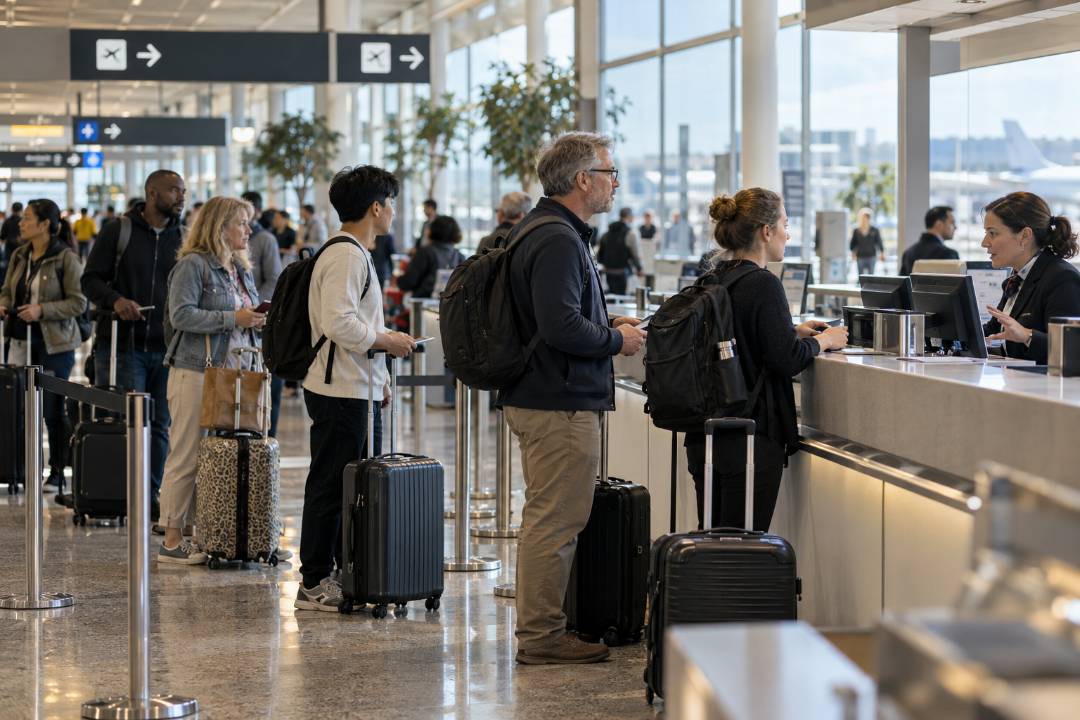
The way a trip is booked often matters more than the reason for the delay. When both flights are on a single booking, the airline that sold the ticket is responsible for getting the passenger to the final destination, so a late first flight usually leads to a free rebooking and, under EU and UK rules, care and possible compensation.
Self-transfer trips on separate tickets work differently. If the first flight arrives late and the passenger misses the second one, the second airline is usually not required to rebook for free, because it treats the missed flight as an ordinary no-show. The likely outcome is a change fee, a fare difference or a completely new ticket, and neither US rules nor EU261 protect the connection between the two bookings.
That is why separate tickets need generous connection times, especially when the passenger has to collect bags and check in again. A layover of several hours feels long on paper, but it is often the only insurance a self-transfer itinerary has, and travel insurance with missed connection cover is worth checking before buying such a trip.
What to Do Right After You Miss a Flight
The first hour after a missed flight decides how much it will cost. These steps give the best chance of getting on the next plane without paying for a whole new ticket:
- contact the airline immediately, ideally before the scheduled departure, through the app, the phone line or the service desk;
- on Southwest, cancel at least 10 minutes before departure to keep value as a flight credit on eligible fares;
- ask the agent about standby on the next flight, same-day changes and any fee or fare difference before agreeing to anything;
- if the miss was caused by the airline, say so clearly and ask for the case to be handled as a disruption, not a no-show;
- on a single booking that arrives more than 3 hours late in the EU or the UK, ask about rerouting, meals, a hotel and compensation;
- check whether the return flight is still valid, since many airlines cancel it automatically after a no-show;
- keep all receipts for food, transport and accommodation in case the airline or the travel insurer reimburses them.
Sometimes the next available seat is in the evening or even the next morning. Spending all that time in a departure hall at Los Angeles International Airport or Paris Charles de Gaulle is not the only option. A luggage storage service like Qeepl helps find a verified storage spot near airports, stations and city centers from US$3.50 per bag per day, so the wait can turn into a few hours in the city, a proper meal or a nap in a hotel instead of guarding a suitcase at the gate.