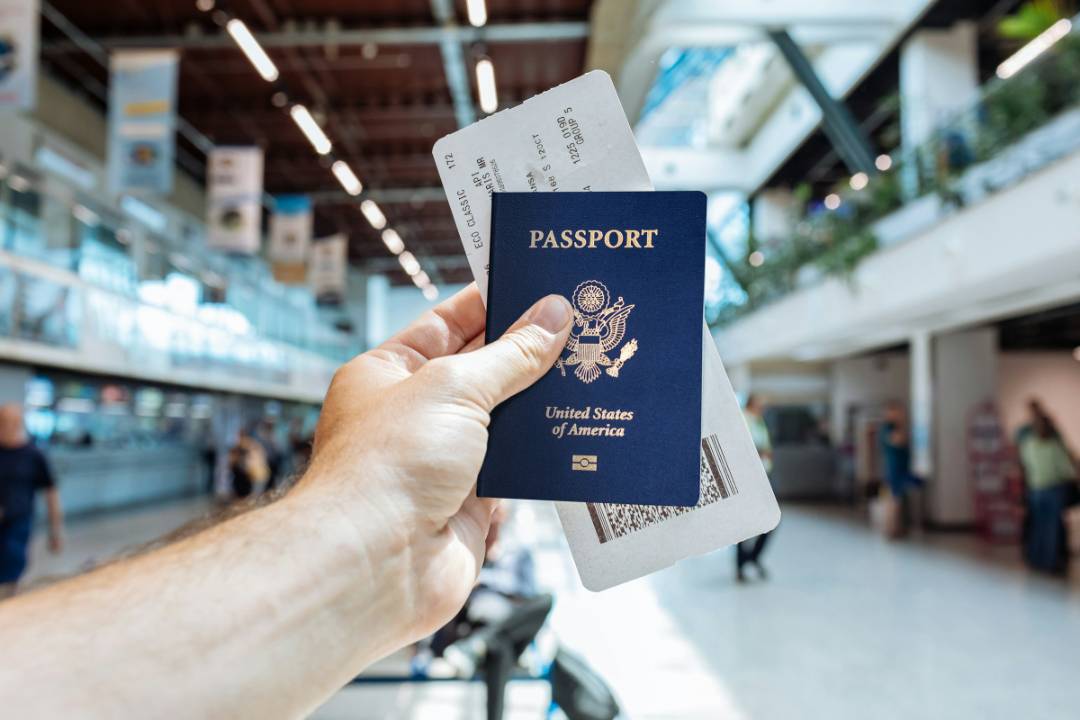

A boarding pass from JFK to Heathrow packs a surprising amount of code into a small space: BA117, a six-character reference, a 13-digit ticket number, a gate, a zone and sometimes four mysterious letters. Each of these identifiers has a specific job, and mixing them up is a common reason travelers struggle to check in online, track a flight or find their booking at the airport desk.
This glossary starts with the flight number itself, explains where to find it and how to track a flight with it, and then decodes the other terms that appear before and during a trip: confirmation numbers, e-ticket numbers, boarding pass details, the difference between direct and nonstop flights, layovers and stopovers, and airport codes.
What a Flight Number Is and How It Is Built
A flight number identifies a scheduled flight. It combines an airline designator with a number of one to four digits. In the code BA117, for example, BA stands for British Airways and 117 is the number of that particular service. Passengers almost always see this short commercial format on tickets, apps and departure boards.
There are two systems of airline codes. The two-character IATA designator, assigned by the International Air Transport Association, is used for ticketing, reservations and timetables: AA for American Airlines, BA for British Airways, LH for Lufthansa, TP for TAP Air Portugal. Air traffic control and flight planning use the three-letter ICAO designator, so the same flights appear as AAL100, BAW117 or DLH401 on operational systems and on some flight tracking sites. ICAO publishes the rules for these operational designators on its designators and indicators page. Both codes for any airline can be checked in the IATA code search.
A flight number identifies a scheduled service, not a unique trip. The same number usually repeats every day on the same route, and airlines can reuse numbers when schedules change. That is why airline apps and trackers ask for the departure date along with the flight number.
Why One Flight Can Have Several Numbers
Many flights are codeshares: one physical flight sold by several airlines, each under its own code. The operating carrier flies the aircraft, while the marketing carrier sells seats under its own flight number. American Airlines, for example, describes codeshares as flights it sells on services operated by partner airlines.
On travel day, the operating airline matters most. Its check-in rules, baggage policy and airport services apply, and departure boards usually list the operating flight number or show several codes for the same departure. A ticket bought from one airline but flown by another should say “operated by” next to the flight details, and that is the name to look for at the airport. All Nippon Airways, for example, states that on flights sold under its number but operated by a partner, the partner airline’s rules apply to check-in times and baggage restrictions. Online check-in for a codeshare flight is also usually done with the operating airline.

How to Find a Flight Number and Track a Flight
The flight number appears in several places from the moment a ticket is booked. These are the quickest ways to find it:
- the booking confirmation email sent by the airline or travel agency;
- the boarding pass, printed or in the mobile wallet;
- the airline app, in the trips or bookings section;
- the Manage Booking or My Trips area of the airline’s website, opened with the confirmation number and last name;
- the departure boards at the airport, next to the destination and departure time;
- the itinerary page of the travel agency or booking site used to buy the ticket.
To track a flight, the flight number goes into the airline’s flight status page, the airline app or a flight tracking site, usually together with the departure date. Trackers then show the scheduled and actual departure and arrival times, delays, the gate or terminal when available, and sometimes the aircraft’s position on a map. When several results appear for the same number, the date, route and operating airline help pick the right one.
Confirmation Number, PNR and E-Ticket Number
The two codes travelers confuse most often are the booking reference and the ticket number. They look different, they identify different things, and airlines ask for them in different situations.
| Term | Typical format | What it identifies | Where to find it |
|---|---|---|---|
| Flight number | 2-letter airline code + 1-4 digits, e.g. BA117 | A scheduled flight on a given route | Confirmation email, boarding pass, app, departure boards |
| Confirmation number, record locator or PNR | Usually 6 letters and numbers | The booking file with all passengers and flights | Confirmation email, Manage Booking |
| E-ticket number | 13 digits: 3-digit airline prefix + 10-digit serial number | The ticket document and its payment | E-ticket receipt, sometimes the boarding pass |
| Seat number | Row number + letter, e.g. 23A | A specific seat on the aircraft | Boarding pass, app |
| Boarding group or zone | Number or letter | The order in which passengers are called to board | Boarding pass |
The PNR (Passenger Name Record), also called the record locator, booking reference or confirmation code, is what airlines ask for at online check-in and in Manage Booking. The e-ticket number matters for refunds, claims and changes made through a travel agent, because it identifies the ticket that was actually issued and paid for. One booking can include several passengers, each with their own ticket number under the same PNR.
Boarding Pass Terms Explained
A boarding pass holds more than a seat number. Knowing what each field means makes the airport process faster and less stressful.
The gate is the boarding point where passengers enter the aircraft, and it can change after the boarding pass is printed, so the departure boards and the airline app have the final word. The boarding group or zone sets the order in which passengers are called, and it is not the same as the seat. The sequence number, often printed as SEQ, shows the order in which passengers checked in and is used by some airlines when calling passengers to board.
Boarding time is when passengers start getting on the plane, and it comes well before the departure time, when the flight is scheduled to leave the gate. On US boarding passes, the letters SSSS stand for Secondary Security Screening Selection: the traveler has been selected by TSA for additional screening at the checkpoint, which takes extra time.
The barcode on the pass follows IATA’s Bar Coded Boarding Pass (BCBP) standard. It stores the passenger name, the booking reference, the route, the flight number, the date, the seat and the sequence number, which is why a scanner at security or at the gate can read everything in a second.
Nonstop, Direct, Connecting, Layover and Stopover
Booking sites use these words in specific ways, and the difference can add hours to a trip. A nonstop flight goes from origin to destination with no stops at all. A direct flight keeps the same flight number from start to finish but may land along the way, and in some cases even change aircraft. A connecting flight involves at least one change of plane and two or more flight numbers.
A layover is the waiting time at an intermediate airport between connecting flights. On international itineraries, a break of less than 24 hours is usually treated as a layover, and on domestic trips the threshold is often around 4 hours. A stopover is a longer break, typically 24 hours or more on international trips, which turns the connection city into a short extra destination. An open-jaw itinerary is one where the traveler flies into one city and returns from another, or arrives and departs from different airports. A typical example is flying into Rome and home from Florence, with the trip between the two cities made by train.
Long layovers and stopovers at airports like Los Angeles International Airport or Paris Charles de Gaulle are a chance to see the city instead of the departure lounge, as long as there is enough time to return and pass security again. A luggage storage service like Qeepl helps find a verified storage spot near airports, stations and city centers from US$3.50 per bag per day, so the hours between flights can go to a museum, a meal or a walk without carrying a suitcase.
Airport Codes and City Codes
Airports have two kinds of codes as well. IATA airport codes have three letters and appear on tickets, bag tags and timetables: LHR for London Heathrow, JFK for New York John F. Kennedy, CDG for Paris Charles de Gaulle and LAX for Los Angeles. ICAO airport codes have four letters, follow a regional structure and are used in flight planning and air traffic control: EGLL for Heathrow, KJFK for JFK, LFPG for Charles de Gaulle and KLAX for Los Angeles.
IATA also issues city codes for metropolitan areas with several airports. NYC covers New York, where JFK, LGA and EWR are the individual airports, and LON covers London, with LHR, LGW, LCY, STN, LTN and SEN. Searching flights by city code shows options from every airport in the area at once, which is useful for comparing prices, but the ticket and the boarding pass always show the specific airport the flight uses. Some IATA codes even belong to places that are not airports at all, such as certain railway stations that airlines sell as part of combined itineraries. IATA explains the system in its fact sheet on location codes.